|
Here's an unusual novella that I enjoyed but have mixed feelings about, partly because it's such an unusual book in more ways than the story.
For one, it's fundamentally a coming of age story but all the usual components are missing. We are never told the boy's name, or indeed anyone else's in a relatively focused cast. The lead character's referred to only as "the boy", just as his parents are only "his mother" and "his father", as indeed his grandfather is only "his grandfather" once he arrives and changes everything. The only named character in the book is the boy's dog, who they call Teach because there's a pirate theme running through the story. Why does the dog have a name when nobody else does? It seems like there must be a reason but it's evading me.
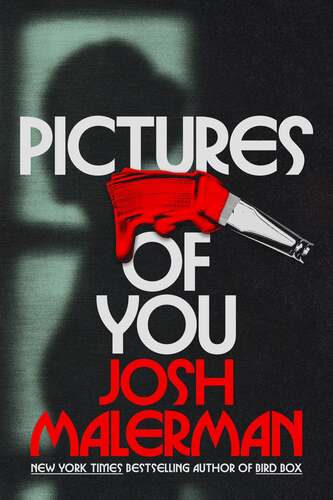
For another, it's not clear what the boy is coming of age into. We might expect that, being a boy, he will grow up to be a man or, if the story wanted to follow a particular angle, a woman, but that's not the case. We gradually realise that he might look like a regular boy but that's not what he is. There is something deeper and more integral that isn't visible. The author's bio includes a note that they "are still deeply disappointed their fins never grew in" so we have a hint at what he might become, just as the cover art may or may not suggest something more. But we don't know.
What we do know is that maybe the boy, who's eleven-years-old when we meet him, thinks that he's living an idyllic childhood, living in relative isolation on the South Carolina coast, the proximity of the sea apparently important. We gradually learn that it's not that idyllic for his parents, because they're not the same. I believe one is what we would call human but the other is whatever the boy is, at least by genetics. Maybe the thing we can't know skipped a generation or maybe she resisted it or made some sort of choice. And then they sat back and waited to see which way the boy would go, almost from the angle that one of them is going to lose him.
His grandfather has no such passivity. When he shows up, it's clearly with the goal of guiding him to become what he was always meant to be. "You know," he tells him soon after arriving, "being a boy in our family is special. The sea runs in your veins." Clearly, he's not suggesting that he'll become a sailor, but what he's suggesting we don't know.
I'm sure there's plenty of deep meaning here but it's told so vaguely that I have no idea what it is. It's easy to see the boy's parents as the equivalent of a mixed race couple or maybe a combination of cis and trans, something that would be taboo in South Carolina society if they admitted it. It's as easy to see the boy himself as destined to become what society would consider a monster, with the obvious equivalents coming quickly to mind. However, I couldn't tell you which, if any or indeed all, the author had in mind when they were writing this.
Another way the author takes us into the literary equivalent of non-Euclidean geometry is the fact that they tell this in present tense but with a knowing glance towards the future. I'm not sure that there's an official name for this, but I seem to remember seeing someone use present omniscient recently and that rings true here. It's like the boy is recounting this story himself from some point in the future but abstracting himself into the third person and the time into the present tense, so changing "I did this" to "the boy is doing this".
Given how we're never given names or explanations, everything becomes ephemeral, almost as if this was a dream, so maybe that's what it is. The boy, whatever he becomes with whatever special attributes come along with that, is dreaming in the future about what he was like in the past. Am I dreaming in even suggesting this? Maybe, but that's what it feels like and the author doesn't want to give us any more solid grounding than cunningly obscuring fog.
Now, this approach does render it all haunting and rather effective, but only as an impression. It's a relatively short book, at a hundred and twenty pages with generous line spacing and margins, a novella but surely not far beyond a novelette, but it works well as an impression and not so well as anything more substantial. Realistically, whether this is for you is going to depend on whether you see that as a good thing or not.
I'm personally used to reading books, enjoying them or not and letting them fade over time as my eyes and brain move onto others. Often I'll pick up something I read ten years and a thousand books ago and remember it in impressions. The details have vanished with time but the ghost of that one book remains and I know deep down inside that it made me feel a particular way. This book did that and I mean exactly that but ten minutes later rather than ten years. It was never anything more. ~~ Hal C F Astell
|
|