|
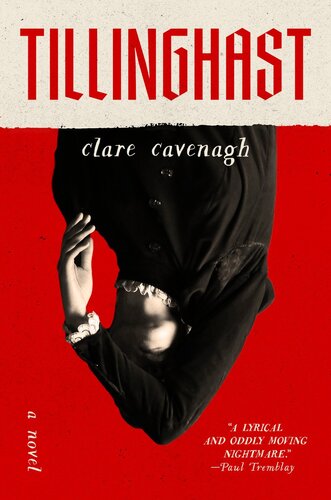
I read this over a period of about a month, which is hardly optimal, but I was out of country for at least half that and didn't take it with me. Even over a stretch of time like that, it still stands up as a fascinating historical horror, but it's worth mentioning at the outset that "possession" doesn't just have one meaning here. Yes, there's a demon and it occupies the body of Alba Díaz. However, as the cover art suggests, there's another, more romantic meaning in play here too, because this is as much about who wants to possess her over their rivals than what is already possessing her.
By historical, I mean that it's set in Nueva España in 1765 in land that's now part of Mexico. These characters are primarily Hispanic, not only Alba Díaz but Carlos Monterrubio, Elías Monterrubio and Padre Bartolomé, all presumably Spaniards by birth. Some are locals too, but the clash is one of religion far more than race. Many of the workers at Mina San Gabriel worship a goddess who is tied in some fashion to mercury and crucial events happen when Bartolomé bans her worship and removes the mercury barrier they believe protects them from whatever's in the mine.
But let me back up a step. Alba Díaz de Bolaños is a young lady who's forging her own future with deliberate effort. She believes herself an ugly daughter and she's adopted, albeit into a wealthy family, but Carlos Monterrubio is the only one who doesn't want to own her, so she orchestrates their engagement. We're firmly in the owning or having meanings of "possession" here. Carlos is part of a family who owe Alba's father serious amounts of money. If he calls in his debts, they will lose their mine, Mina San Gabriel, naturally, and they'll be ruined as a result.
Therefore, this engagement seems like a match made in heaven to the two young people making it. Alba will escape her parents' clutches and a worse fate—we later learn that Carlos is gay, thus won't ever force his attentions upon her, beyond the responsibility of creating an heir—while her father isn't likely to call in debts from family, so the Monterrubios will instantly become far more solvent. And so off they all go to Casa Calavera, or Skull House, to make it all happen at Mina San Gabriel. Of course, it doesn't remain that simple for a number of reasons, thus returning us to the multiple meanings of possession.
From one side, as soon as Alba gets there, she feels a force that's telling her to leave. She hears a baby in the mine. She dreams of blood on her hands. She sleepwalks often and doesn't seem to be herself when she does. There's a voice in her head and people start to die at the mine, murdered by person or persons unknown. Most tellingly, her heritage is all around here. She learns that she was found and the fact that she was adopted may well have been as much to spirit her away from there as to find her a home. This is the supernatural meaning of possession, by a demon.
From the other side, she meets and dances with Elías Monterrubio, Carlos's cousin who has been abroad for a long time, studying, working, even serving time in prison. However, he's been called home to Casa Calavera because his father Victoriano has died. He also happens to have a decent supply of mercury that would prove thoroughly useful to the family. The plan is to use his mercury to fund the mine, mine the silver and bring the enterprise back to profitability. However, he still remains the black sheep of the family, long before he meets Alba. Here we're back to a romantic meaning of possession.
This is a fascinating novel. Initially, it's a historical Latinx story, with supernatural overtones and grounding in the mining of silver and the owing of debt. Then the supernatural elements grow to make this feel rather like a Dennis Wheatley 'Black Magic' novel. However, to temper that, we're also thrown into torrid bodice-ripping romance. Carlos becomes the establishment, who politely respects his betrothed, who in turn finds him comfortable. However, Elías seizes her attentions in a very different way and we're into florid descriptions of the raw ache of passion.
As Carlos drifts somewhat into the background, Elías is happy to take centre stage, part Duke de Richleau in his adventurous drive and occult knowledge and part romantic bad boy manly man. It must be said that there are points where he bounces back and forth between these two even in a single scene. Much of the tension in the later stages involves him being asked to kill her, because it's the only way, but finding himself unable to do so because he loves her deeply and therefore must find another way.
Now, I've left a heck of a lot out, because one of the most successful aspects of this book is a deep immersion in place. From the earliest scenes, this unfolds with beautiful writing, clearly prose to read aloud, and it all feels appropriately of its time, aided by a neat subtly aged internal design. The choice of typeface, slightly elongated vertically, and the chapter headings, are well chosen. I have no idea what a silver mine in Mexico looked like in 1765, but, after reading this, it feels like I've been living in one for a while, both as a noble Spaniard in Nueva España and a local miner of humble origin living under an occupying force that wants to destroy my beliefs.
Somewhat inevitably, that means that there are a lot of words here that aren't in English. When we meet Elías at the far side of the Mediterranean studying occult tomes he'd picked up in exotic markets, we learn that books like 'El Libro de San Cipriano' are written in aljamía, Spanish words in Arabic ligatures. Most of the words we see and maybe don't recognise are Spanish words in the traditional Latin alphabet, some showing up in a rush, like "solareros", "criollos", "peninsulares" and "mineros", which arrive in about half a page. Some, however, are native, like "matlazahuatl", which is a deadly disease. Most are clear in context but I had to look some up. None caused me to lose the flow of the book.
This is my first Isabel Cañas, though I also have 'Vampires of El Norte' on my TBR shelf ready for a read and review. That came out in 2023 and it's a lot higher on my priority list now than it was last month before I read 'The Possession of Alba Díaz'. Cañas writes beautifully and in a voice I haven't heard before. I would like to read more. ~~ Hal C F Astell
For more titles by Isabel Cañas click here
|
|