|
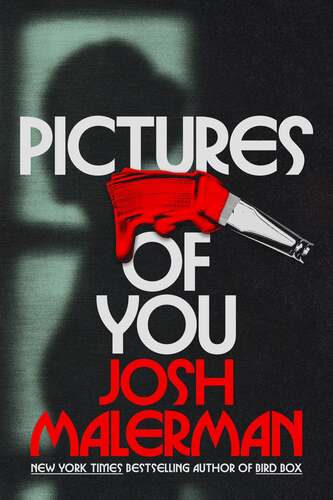
There are a couple of ways to take this very modern horror novel but I doubt people are likely to see both while reading. It played one way to me until I'd finished and thought about it, especially its vicious ending, and realized that there was another way to take it. Its success may depend on which way you take it, because the ending is either empowering or unsatisfying. Either way, it's a bit of a cheat, but that's ironically appropriate given what the core of it revolves around.
We're here to follow Mavis Dwyer, who starts out the middle driver in a car accident. She's bitterly worried before it, wondering if her marriage to Jerrod is over, but the accident quickly takes her attention away from such musings. She's largely fine, though taken to hospital to be checked, just in case. What's important isn't that the driver who caused the accident dies in the crash, but that she knows him. It's Brother Bill, who went to her church. He even went to her wedding to Jerrod, and that's a pretty freakish coincidence.
If we're not asking questions at that point, we'll start pretty soon afterwards, because everything is off here. Nobody knows the other guy in a car accident. And, while Brother Bill's dead, his wife, Sister Rose, is delusional. Next thing we know, Havilah Green is digging up Mavis's back yard. She was Mavis's roommate at a religious retreat, 'Victory in Vacancy: Flourishing as a Single Woman', and she was at her wedding too. However, when Mavis rings her up the next day to ask questions, she's adamant that she wasn't in her yard. What would she possibly have been doing in her yard?
We can't help but wonder at this point whether Mavis is acutely paranoid or whether there are a whole bunch of people really out to get her. Maybe Brother Bill really was a freakish coincidence. Maybe Havilah is an untreated sleepwalker. It's a stretch, but it's possible. However, things only escalate. Someone tries to drop a heavy light fitting onto her at a hardware store and then kills two employees who rather take exception to attempted murder. Then, there's a break in. Three intruders attack her in her own house at night. She blinds one, kills another. The third is oblivious afterward that he did anything. He firmly believes that everyone's lying to him about it. And you guessed it. They're all members of her church who attended her wedding.
This is wonderful setup, precisely because it isn't easily explainable. It makes no sense but we can only assume that it's happening or Mavis is seriously crazy and the latter doesn't seem likely. The need is therefore to figure out why these outrageous unexplainable things are happening. There is a huge amount of guilt floating around and plenty of fear too. While Mavis and Jerrod seem to be a happy couple, we can't forget how the former felt that their marriage might be over. Why? It has to do with their church, which is really now their former church, her parents' church.
I grew up in the Church of England, which functioned with the same core set of Protestant beliefs and values that any Christian denomination has, but it was a very traditional local congregation, lots of old people and a few younger families, mostly working to keep the church active and to do good within the community. Then I travelled around the United States. I can't remember where I was in the deepsouth when a revival meeting in the next hotel room woke me up one morning. It just seemed weird and a variety of further experiences were even weirder. Nobody in my church spoke in tongues. Nobody passed snakes around to test their faith in Jesus. Nobody preached the prosperity gospel. This was an entirely different world and often a rather un-Christian one.
I'm assuming that the church that Mavis and Jerrod used to attend, where they were married and which her highly controlling parents still attend is a Christian church, but I'm not sure that comes up. It feels much more like a cult, which, of course, opens up a whole new avenue for explanations. After all, cults don't tend to like it when members leave. They control them specifically so they're afraid to do that. So is that what's going on here? Mavis may have left this church but she keeps a relationship open with her parents and they absolutely seem like the sort who would do things to other people without permission but in what they believe to be their best interests.
From one of the two angles I mentioned at the beginning, I asked some of the right questions but not all of them and I didn't ask any from the other angle. I should add that, the more I think about that one, the less I think I should have seen it until after reading the ending, which means that it counts as a twist that some people will see coming but I completely didn't. Unfortunately, when it arrived, it changed the book for me and not in a good way, because I didn't see that other take, in which the ending would have warranted me to leap in the air and high five the author.
Needless to say, that ending affects the book for me immensely. Until then, it played out freakily, as a horror story that could happen to anyone. It doesn't seem to matter who we are or what we do, though that's really not the case. As we look at the guilt and the fear, we can extrapolate the causes pretty easily, though not necessarily who and why. However, it feels like the survivor of a cult not managing to escape its clutches forever, so we don't dig too deep into causes, because it seems just as likely that the crime being punished is simply leaving.
I'm having to be very careful what I say and what I don't, because it would be easy to drift into the sort of territory where spoilers become inevitable, completely disregarding the ending. What I'll stick with is that this unfolds freakily in a way that might make us rather paranoid. That's the best aspect of the novel to me, how it might affect our willingness to trust the people around us. Sure, we've known them forever and they came to our wedding but does that mean that they won't try to kill us in five minutes time? As far as I know, the only murderer who's been to my house to party is safely on death row right now, but what about everyone else?
The worst aspect has to be the ending, though I understand why it's the way it is. I don't like it and I don't like how it changes what I feel about the characters. It doesn't change my feeling that this church is a cult and everybody in it should leave, but it suggests that maybe some people who I've categorised as good aren't and some people I've categorised as bad aren't either and that isn't a good feeling to suddenly acquire when reaching the epilogue of a horror novel. I may reserve my judgement until I wait a couple of years and forget enough of this to give it a second reading with mildly fresh eyes. ~~ Hal C F Astell
|
|