|
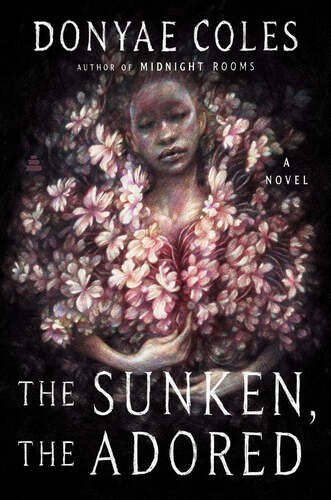
Here's something very interesting indeed and its potential is obvious from moment one. The first chapter is gruesome, with Mercy photographing a dissected cadaver prepared by the Anatomist, Umberto Castelli. He was expecting to hire the Professor, but he didn't make it across the ocean. Mercy did, so she becomes the Photographer. She's unemotional about the process, surprising her employer, and she's highly capable working a scientific process and the lighting that surrounds it with what seems like magic to anyone else who sees it done.
I should add that those terms feel a little odd because she's not technically taking photographs at all but daguerrotypes, using that specific term. Daguerrotypes predated photographs, so I guess they also predated the term. However, the time is odd as well, because the back cover blurb tells us that we're in Venice in 1700, while Louis-Jacques-Mandé Daguerre wasn't born until in 1787. To be honest, I don't recall reading a date in the actual text, so either this is alternative history or a HarperCollins employee put the wrong date on the back.
What struck me early, beyond how dark that first chapter gets right out of the gate, is that Coles is a poet in prose. Even with Mercy seeming unemotional, the descriptions are evocative. Later, a particular scene highlights why. The body of a woman is found on the canal, partly eaten. As Coles looks at the wound, she's as interested in the sun shining into it as the wound itself. Everything is an experience here, something to be savoured, and it's the most sensory horror novel I've read in a long while, carefully playing to all our senses. This is a book that aims at touch, taste and smell, not just sight and sound.
That said and first chapter aside, it doesn't feel like a horror novel for the longest time. Mercy is here to take photographs of corpses for the Anatomist, which is suitably dark, but she'll stay with the Contessa instead and the biggest horror at her place is boredom. The Contessa, whose name is Adelaide, embraces the senses on a daily basis, although not as decadently as that might seem. Her house is always busy and thoroughly alive. Night brings clowns, acrobats and merriment. The daytime belongs to servants (her brownies) and children. Many languages share the air, and that benefits Mercy, who speaks English, French and Latin but not, at this point, Italian. She'll learn.
She's a fascinating character and, however many others we meet, this is always her story, her experience. Life at the Contessa's agrees with her, and she doesn't remotely stay unemotional all the way, even though she initially feels out of place to a large degree. Perhaps most of all, she has no experience as a free woman, as she used to be owned, presumably as a slave in the New World. However, her history is a little different to the norm for a slave. She was a doll, owned by Mother, who treated her like a living plaything. When Mother died, her ownership moved to the Professor, who was Mother's actual child. And now there's nobody left to claim her because the Professor is gone.
We don't know how, though it seems like Mercy arrived on a ghost ship that drifted into dock with nobody alive on board. Except her, of course, but nobody seems to know that. When it comes up in conversation, it's dismissed as a false memory. It must have been some other ship; it couldn't have been the 'Swallowtail'. I had many questions after the first couple of chapters about all this. Coles does provide answers but she takes her time. We're fifty pages from the end before we learn the truth of what happened on board ship and, if we were wondering where the horror was, then that marks the point where we're hurled into its depths.
To be fair, there's horror before that point too. While Mercy is learning how to enjoy things again, or perhaps for the first time, at the Contessa's, learning how to live, putting flesh onto her bones and discovering the possibilities of wanting, there's some sort of monster outside the house that the Night Watch can't track. It begins with the distance of myth but gradually gets closer until the body mentioned earlier floats by in the canal. Suddenly, there are warnings to not venture out on your own and the Night Watch bring their suspicions to social events at the Contessa's. Of course, we eventually meet this monster, but nobody can agree on what it looks like.
Frankly, Coles never tells us. She drops a lot of hints and there are multiple ways to read this, the one I'm leaning towards relying on a particularly vicious twist. However, how we interpret it all is up to us. The label on the back cover is "Cosmic & Eldritch" and that applies fairly enough to how this monster appears, but less so for the book as a whole. There's cosmic horror here, for sure, but it isn't a cosmic horror novel. If anything, it's a period character drama, throwing a character with little experience but serious potential into a wild and hedonistic establishment. Mercy thinks, on her arrival, that it's like the brothels the Professor used to visit. It isn't. It's just alive, at a time in which entertainment was something you largely made for yourself.
And that flavours how we read this book. The monster could be some kind of supernatural being, an alien visitor stuck in Venice and needing sustenance. It could be something as vague as plague or madness or just a proto-serial killer appetite. The point is that, if these people see the science of the daguerrotype as magic and thus Mercy as a magician, would they really see each of those four things differently or in exactly the same way? If this is truly 1700 and so alternate history to allow for the anachronistically early daguerrotype, Mercy ought to be happy they don't see what she does as witchcraft and burn her as a scapegoat for whatever's happening.
Instead, they welcome her and pay her in gold for a visual representation of themselves, novelty worth the price. They bring her back to life, after however many years in slavery, each kindness a reminder that she's free, every smile a reinforcement and any invitations, however trivial or vast, conscious inclusion. That the backdrop to her rise is perhaps the fall of the city is grand irony and vicious penance, almost a reminder that she doesn't deserve to be happy. And that's the arc that matters most, Mercy's; which is why this is a character drama more than a horror novel, however gruesome it starts and however brutally it ends.
Donyae Coles is a relatively new author, her only previous novel, 'Midnight Rooms' also published by Amistad with a cover obviously created by the same artist to ensure consistent editions. It also seems to be historical but in a different setting and potentially different era. It landed a nod for a Stoker Award for Superior Achievement in a First Novel, though it lost to Monika Kim's 'The Eyes are the Best Part'. I should seek out both. ~~ Hal C F Astell
|
|